
If you’ve landed here searching for The Brain Song reviews, you’ve probably seen the claims:
“Activate your brain’s memory protein.”
“17 minutes a day.”
“Backed by neuroscience.”
When I see phrases like “stimulates BDNF” and “created by a trained neuroscientist,” my scam radar doesn’t just twitch it lights up.
Today I’ll share my honest and unbiased review of The Brain Song.
I recommend you read it before you make any rash decisions about joining!
Before I start…
If you’re tired of scams and actually want something real that works online, this is what I personally recommend after 15+ years of testing everything:
This is the best business to start in 2026 and made me over 27k last month alone:
👉 See my No.1 recommendation here
Now let’s get into it.
What Is The Brain Song Supposed To Be?

On paper, it’s simple:
-
🎧 A 17-minute audio track
-
🧠 Uses binaural beats / gamma frequencies
-
🔬 Claims to increase BDNF (Brain-Derived Neurotrophic Factor)
-
💰 $39 one-time payment
-
📥 Digital download only
No pills. No supplements. Just audio.
That sounds harmless enough.
But harmless doesn’t automatically mean effective.
The Brain Song Big Claim: “It Boosts BDNF”
This is where things start getting slippery.
BDNF is a real thing. It’s involved in neuroplasticity, learning, and memory.
Here’s the problem:
There is no solid clinical evidence showing that listening to a generic downloadable audio track increases BDNF in humans in any meaningful way.
What does reliably increase BDNF?
-
Exercise
-
Sleep
-
Proper nutrition
-
Sunlight exposure
-
Learning new skills
Not a $39 MP3.
Whenever a product jumps from “some early-stage research on gamma waves” to “this will activate your memory protein,” that’s marketing — not medicine.
The “Trained Neuroscientist” Mystery
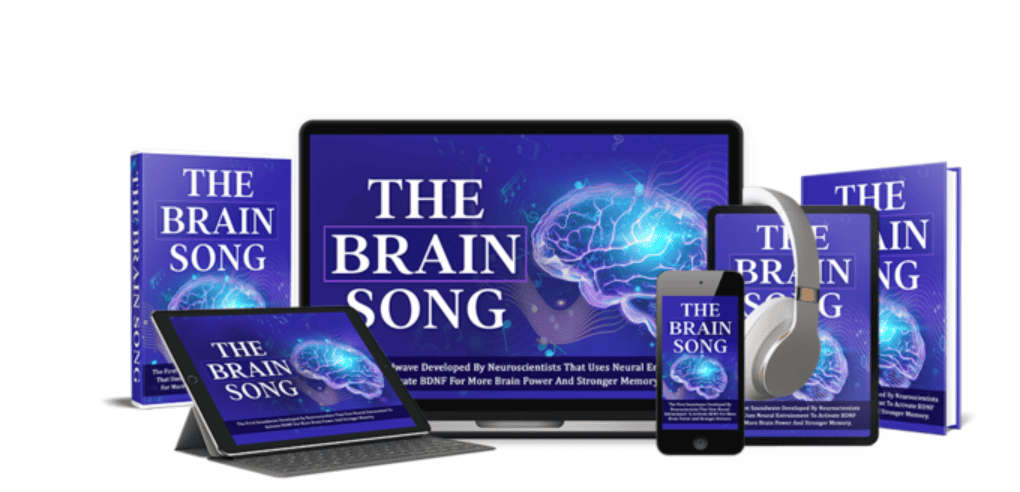
The sales page says it was created by a trained neuroscientist.
Okay.
Who?
-
No full academic profile.
-
No published research attached.
-
No verifiable credentials.
-
No independent interviews.
In the supplement and digital-health space, vague authority claims are common. If someone is genuinely proud of their credentials, they don’t hide them.
That alone doesn’t prove it’s a scam.
But it’s not a green flag either.
Brainwave Entrainment – Is That Real?
Yes — brainwave entrainment is a real concept.
Binaural beats can influence relaxation and mood in some people.
But here’s the key distinction:
“Might slightly help you relax”
≠
“Stimulates memory proteins and transforms cognitive performance.”
The research on binaural beats is inconsistent. Some studies show mild benefits. Others show no significant effect.
It’s nowhere near strong enough to justify the kind of confident claims made in the marketing.
Let’s Talk About the Brain Song Reviews
Most “positive reviews” online:
-
Repeat the sales page wording
-
Use stock testimonials
-
Push you to the official website
-
Give it 4.5–5 star ratings
-
Earn affiliate commissions
That’s not independent journalism.
That’s SEO affiliate content.
Are some users reporting feeling more relaxed? Probably.
But relaxation ≠ neurochemical transformation.
And anecdotal “I feel sharper” reports don’t equal measurable cognitive improvement.
The Brain Song Bonuses… Classic Info-Product Packaging
With your purchase, you also get:
-
“1-Minute Memory Saver”
-
“Memory Smoothies Guide”
-
“5 Most Important Memory Habits”
This is classic digital info-product stacking.
It creates perceived value without adding real substance.
If this were cutting-edge neuroscience, it wouldn’t be bundled like a late-night infomercial.
Is The Brain Song Dangerous?
Physically? Probably not.
It’s just audio.
But the real danger is subtle:
When people believe they’ve found a shortcut to cognitive performance, they often ignore the boring things that actually work:
-
Exercise
-
Diet
-
Sleep
-
Deep work
-
Reducing screen overload
-
Skill-building
No 17-minute shortcut replaces those.
Who Is This Really For?
Honestly?
It’s for people who:
-
Feel brain fog
-
Want a simple fix
-
Don’t want to overhaul lifestyle
-
Are attracted to “science-backed but easy”
That psychological angle is powerful.
And marketers know it.
So… Is The Brain Song a Scam?
Here’s the NoBSIMReviews take:
It’s not necessarily a malicious scam.
But it is heavily overhyped.
The science is stretched.
The authority is vague.
The claims are bigger than the evidence.
At best, it’s a relaxation audio with smart marketing wrapped around it.
At worst, it’s exploiting scientific terminology to justify exaggerated promises.
Either way, it’s not some revolutionary cognitive breakthrough.
The Brain Song – Hones No BS Verdict
If you want background audio to relax or focus — you can find free binaural beats on YouTube.
If you want better memory and clarity:
-
Lift weights.
-
Do cardio.
-
Sleep properly.
-
Eat properly.
-
Read difficult material.
-
Limit dopamine overload.
Those have real evidence.
A $39 MP3 claiming to stimulate BDNF?
That’s marketing dressed up as neuroscience.
Before you go – if you actually want something real that works online, this is what I personally recommend after 15+ years of testing everything:
👉 See my No.1 recommendation here